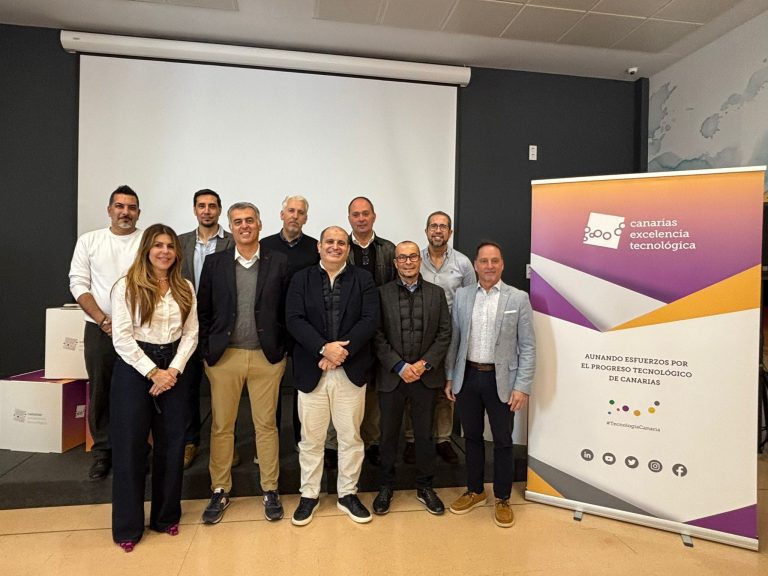
On 21–22 October, Las Palmas de Gran Canaria hosted a new edition of OktoberTech 2025, the tech event organised by the Canarias Excelencia Tecnológica Cluster. The conference brought together professionals, institutions and companies around two key pillars for Spain’s digital future: dual-use technologies and cybersecurity.
Presented by Jezabel Artiles, the event took place at the Hotel Cristina by Tigotan and gathered a strong representation of the Canary, national and international ecosystem, with support from organisations such as Proexca, Conetic and the Regional Vice-ministry for Universities and Research of the Government of the Canary Islands.
A strategic look at the data economy
On Tuesday 21st, the programme focused on cybersecurity and defence, featuring high-level talks such as that of Brigadier General Guillermo Ramírez Altozano, head of JCISAT (the Ministry of Defence’s Directorate for Information Systems, Telecommunications and Technical Assistance). On Wednesday 22nd, attention shifted to artificial intelligence and the data economy, addressing topics such as technological sovereignty, interoperability and the impact of generative AI.
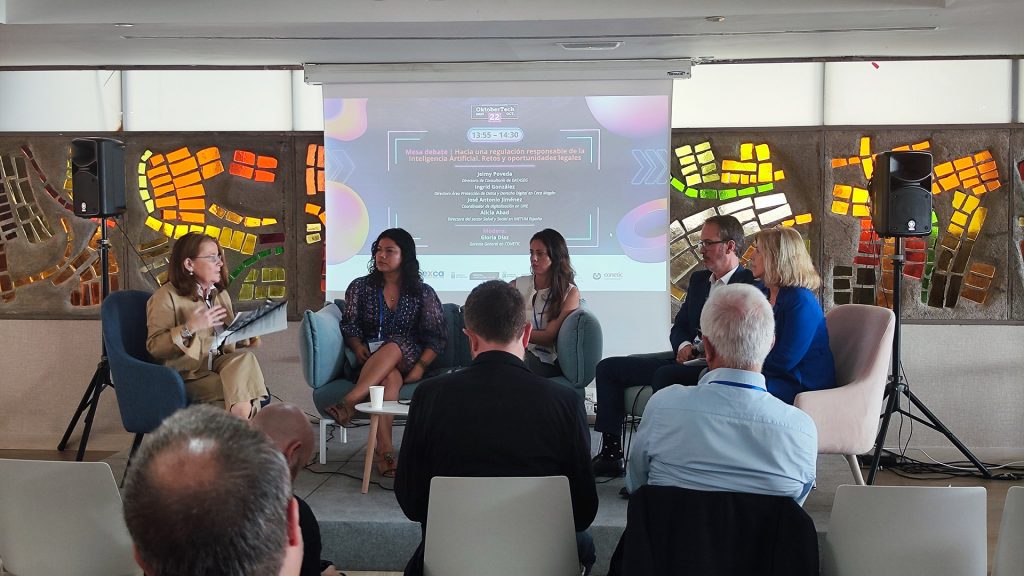
MNX Online was invited to join the round table “Challenge: Interoperability and data governance in federated spaces”, alongside leading experts:
- Óscar Lázaro, Secretary-General at Baidata.
- Manuel Gutiérrez, Head of Digital Ecosystems at Gaia-X.
- Felipe Bravo, Head of Data & AI at the University of Chile.
- Moderator: Raúl Uría, Managing Director at ASCENTIC and Technical Director of the Data & AI Working Group at CONETIC.
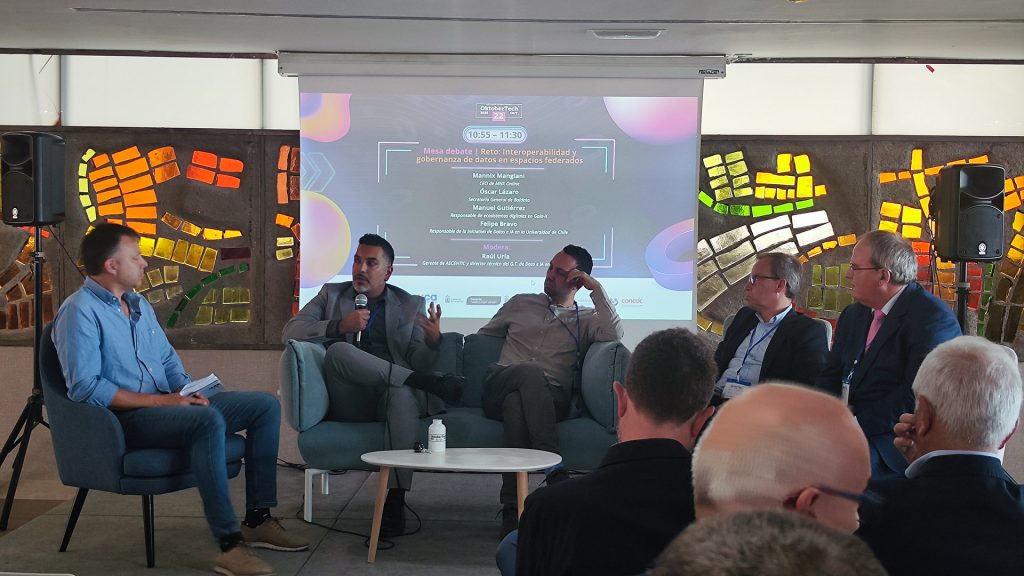
The session explored the real-world challenges of building interoperable and governable data ecosystems, at a time when Europe seeks to consolidate a federated infrastructure so that data value does not concentrate in a few hands. We shared our experience from smart tourism and territorial economy, highlighting the need for open standards, trust mechanisms and sustainable regional models.
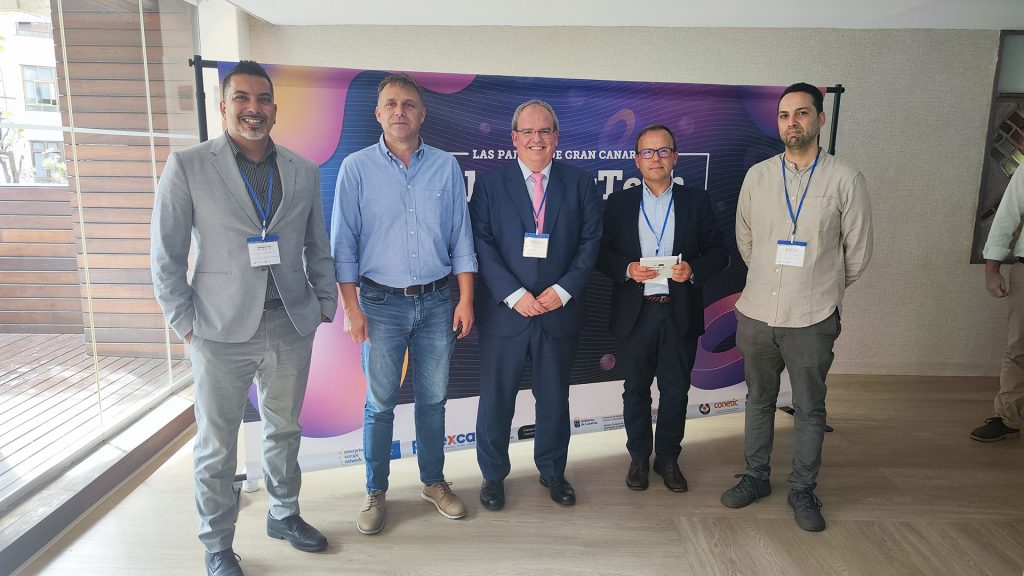
A network that keeps growing
OktoberTech was not only a chance to add our technical perspective; it also helped us reconnect with sector colleagues —many of them CET members— and strengthen ties with institutions and organisations we have worked with in other contexts. This includes CONETIC, with whom we collaborate within the UNE committee on data spaces, and the University of Chile, whom we met again after our online teaching contribution to UEC’s Master in Hotel Management.
The address by Ruth del Campo, Director-General for Data at the State Secretariat for Digitalisation and Artificial Intelligence (SEDIA), was another highlight, underscoring the role of data spaces as a backbone for Spain’s and Europe’s digital autonomy.
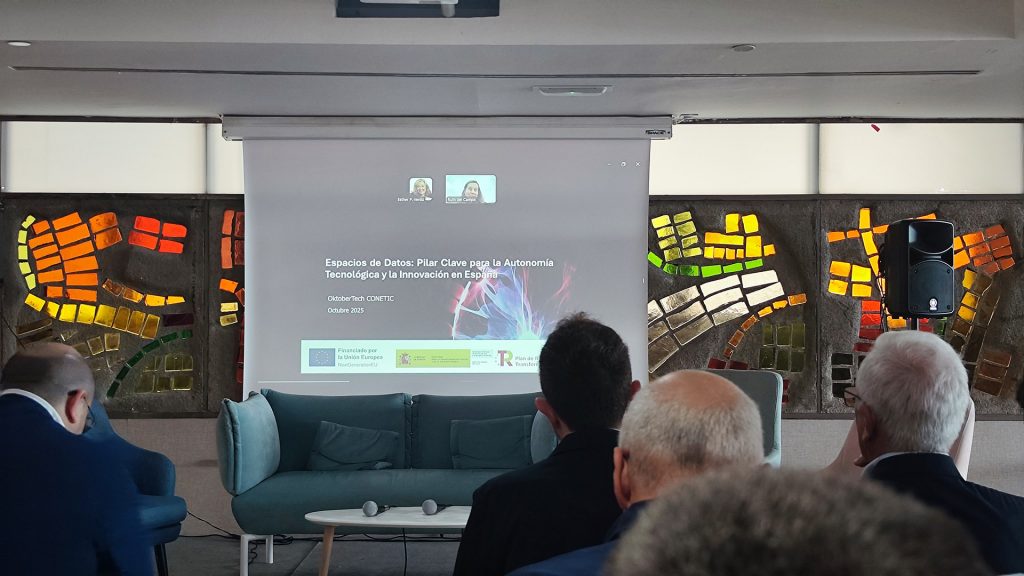
Beyond the stage
The value of events like this goes well beyond the formal programme. Over the two days, we held informal meetings with innovative companies, spoke with professionals across the national ecosystem, advanced future collaborations and also gave a short interview for Televisión Canaria that we hope to share soon.
MNX Online would like to thank the Canarias Excelencia Tecnológica Cluster and partner organisations for continuing to create spaces for dialogue, visibility and connection for those of us working from the islands on technologies with a European and global outlook.
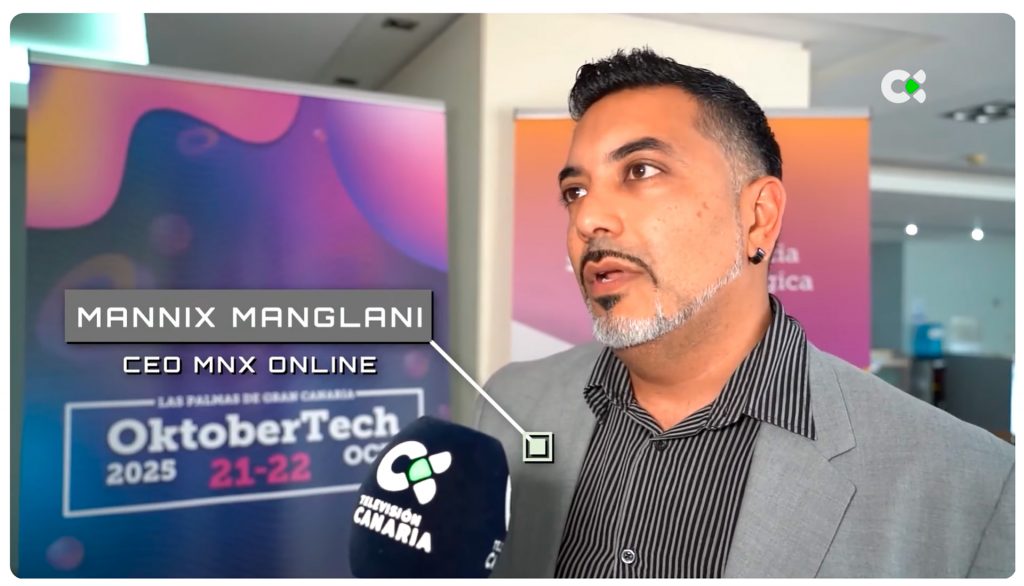
Would you like to learn more about TOURiLab Data Space and how data spaces can transform tourism and the digital economy from the Canary Islands? Find out more here.

TOURILAB DATA SPACE, ref. DUM-030000-2023-580, has received support for “Last-Mile” digitalisation projects for companies in the tourism sector (2023 call) from the Ministry of Industry and Tourism, under the Recovery, Transformation and Resilience Plan – NextGenerationEU funds.