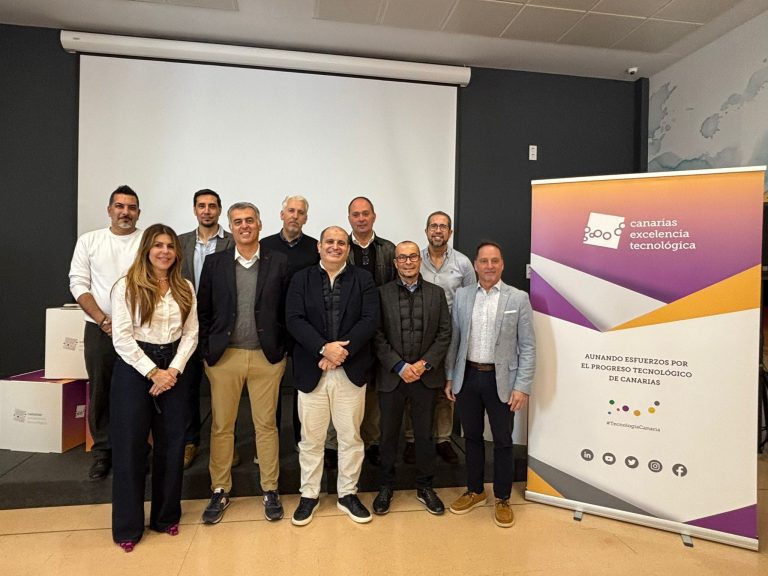
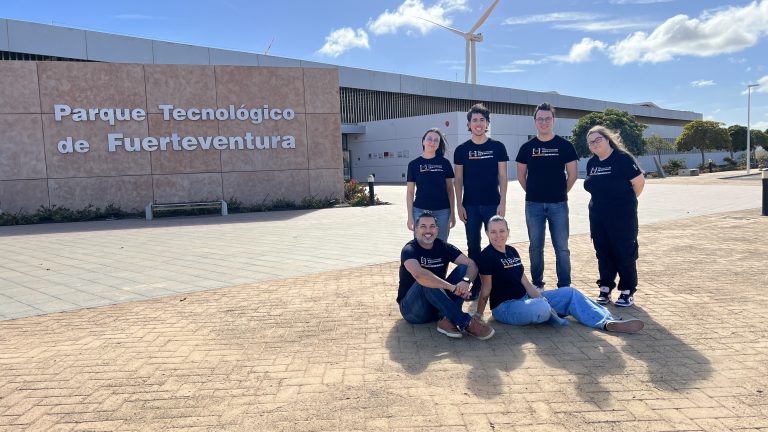
Smart Data Models for tourism: at MNX Online, we’re proud to share that three data models born from real use cases have been accepted into the Smart Data Models initiative, within the Tourism Destinations repository. The models are TouristRental, ConsumptionBehaviour, and TouristProfile—three building blocks that help tourism data “speak the same language” so it can be reused reliably across destinations, organisations, and different solutions.
This milestone is especially meaningful to us for one simple reason: it’s not theoretical—it’s applied work. These models were consolidated from lessons learned and needs detected in our TOURiLab-SDG experiment, focused on enabling a more sustainable and measurable tourism model. And, like most things worth doing, it has been a collective effort: thanks to Noray and Vancampers Lanzarote, two members of the consortium we formed to push the project from the real world, with patience and long-term vision.
What Smart Data Models (SDM) are and why they matter
Smart Data Models is a programme driven by international organisations (including the FIWARE Foundation, TM Forum, IUDX and OASC) to curate open data models that serve as a common foundation for interoperable solutions across multiple sectors—including smart tourism. The idea is simple but powerful: when data is represented with the same meaning and structure, solutions integrate more easily, replicate faster, and reduce dependence on hard-to-reuse proprietary formats.
A Smart Data Model is not “just a JSON”. At a minimum, it includes four elements: a schema (structure and types), a human-readable specification, a URI to identify the entity and its attributes, and examples (typically NGSIv2 and NGSI-LD). Models are also published under an open licence with clear rights: free use, free modification, and free sharing of modifications, with attribution.
A technical note: these models are usually published as JSON Schema and widely used in NGSI contexts. Ensuring your data conforms to the model depends on your own pipeline, because platform components do not always enforce validation automatically.
The three accepted models: TouristRental, TouristProfile and ConsumptionBehaviour
Within the Tourism Destinations repository, these are the three models we contributed to that are now part of the domain catalogue:
1) TouristProfile: better profiles, better decisions
TouristProfile describes a tourist profile based on characteristics of the traveller and the trip: how they choose their stay and how they behave in terms of spending and presence at the destination. In practice, this entity helps go beyond isolated statistics and enables consistent comparison, segmentation and planning.
Examples for destination management include service sizing, product design by segment, economic impact analysis by typology, or evaluating sustainability measures with a realistic lens.
2) TouristRental: structuring data in the rental economy
TouristRental models the concept of renting a facility by a tourist. This is especially useful when connecting supply and demand with clear rules (availability, typologies, traceability) and when destinations need to integrate diverse information without reinventing fields every time.
In tourism—where accommodation, mobility and experiences coexist—a standard entity supports catalog integration, analytics, operational monitoring and, above all, interoperability between systems that were never designed to talk to each other.
3) ConsumptionBehaviour: measuring consumption to make sustainability data-driven
ConsumptionBehaviour is designed to record and track resource consumption (for example, electricity, fuel or water) over a period of time. It connects directly with a simple reality: if sustainability is not measured, it becomes a statement. With structured, comparable data, you can move into management (reduction, efficiency, monitoring and continuous improvement).
In sustainable tourism contexts, this enables more granular analysis: consumption by service typology, seasonality, usage patterns, or operational changes applied in companies or destination infrastructure.
From a real use case to a reusable standard
Having these models in Smart Data Models has a clear meaning: they are reusable. They do not remain “locked” inside a single project or solution. The initiative is designed to incorporate models from real use cases, following an “agile standardisation” approach when there is enough evidence and examples.
For MNX Online, this reinforces a line of work we defend in data spaces and smart tourism: building semantic infrastructure (rules, models and shared meaning) is what makes technology scalable, interoperable and useful in the long run.
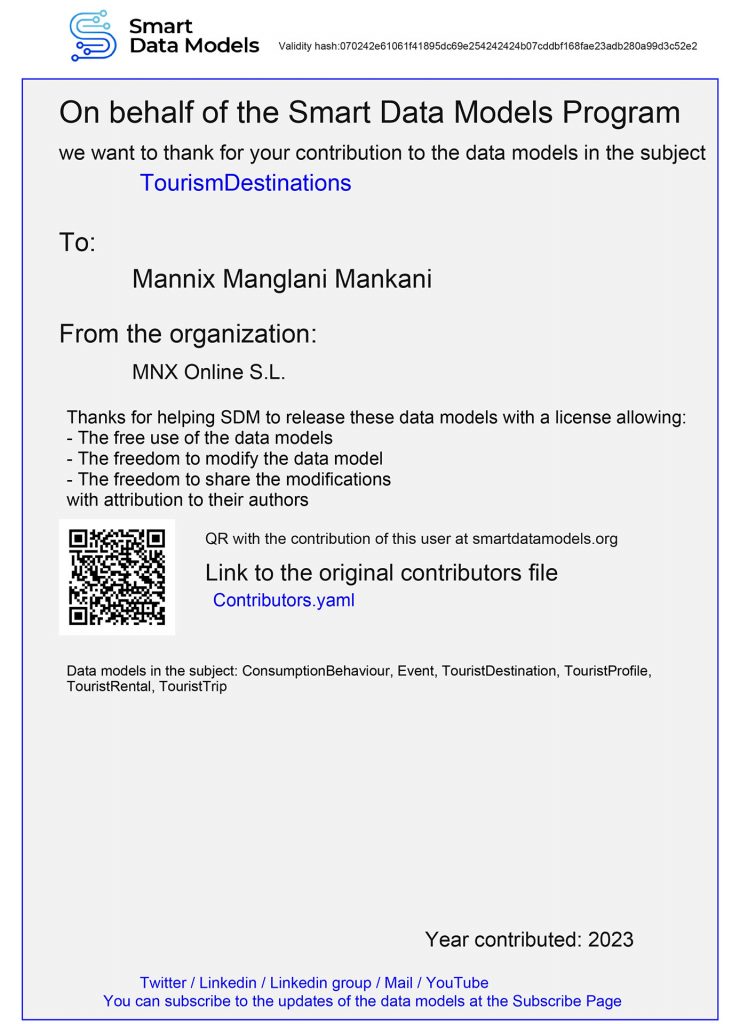
Next step: applying the standard to more use cases
This milestone is a stepping stone, not the finish line. Later on, we’d like to publish a dedicated post for each model (TouristProfile, TouristRental and ConsumptionBehaviour) with practical examples: what it solves, how it is implemented, and how it connects to real destination and business use cases.
If you’re a tourism organisation, destination, or company working with data and you want to avoid reinventing formats from scratch, get in touch. We love collaborating when there’s ambition to do things properly: data with meaning, clear rules and measurable results.