Smart City Ciudad 15 raises a simple question: what if we started building smart cities from primary school? Spoiler: it’s already happening.
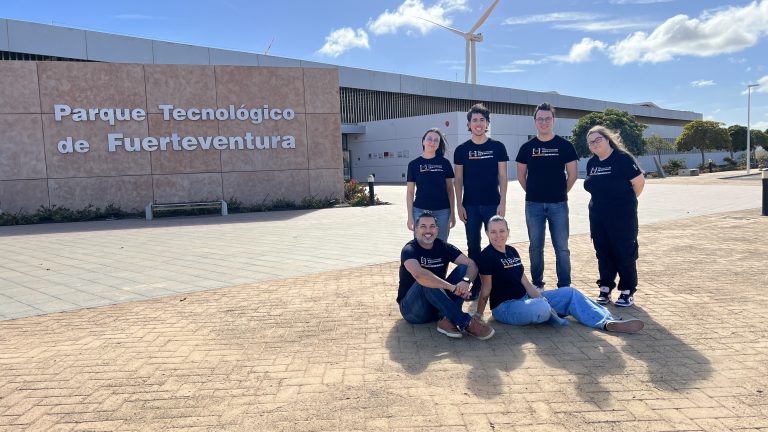
A few weeks ago, we welcomed a group of 5th-grade students from CEIP Poeta Domingo Velázquez to our MNX Online and TOURiLab offices. They presented their educational project, “Smart City – Ciudad 15”, created to explore whether Puerto del Rosario can be considered a “proximity city” following the 15-minute city approach. They shared their fieldwork, the questions they asked, and the conclusions they were developing from their own perspective. That day made one thing clear: the future is being built in classrooms—and it’s full of brilliant ideas.
A live presentation at the Fuerteventura Technology Park
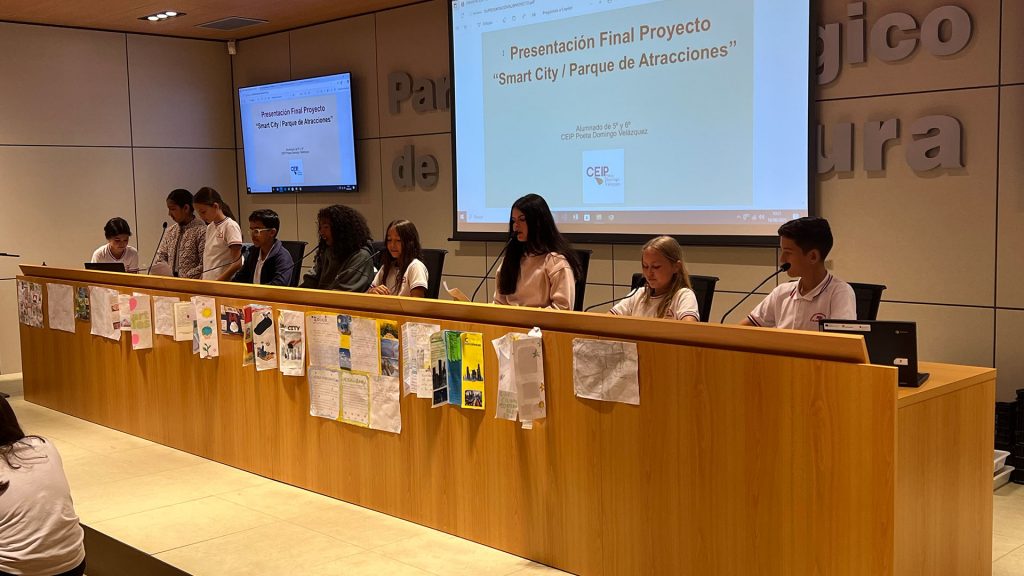
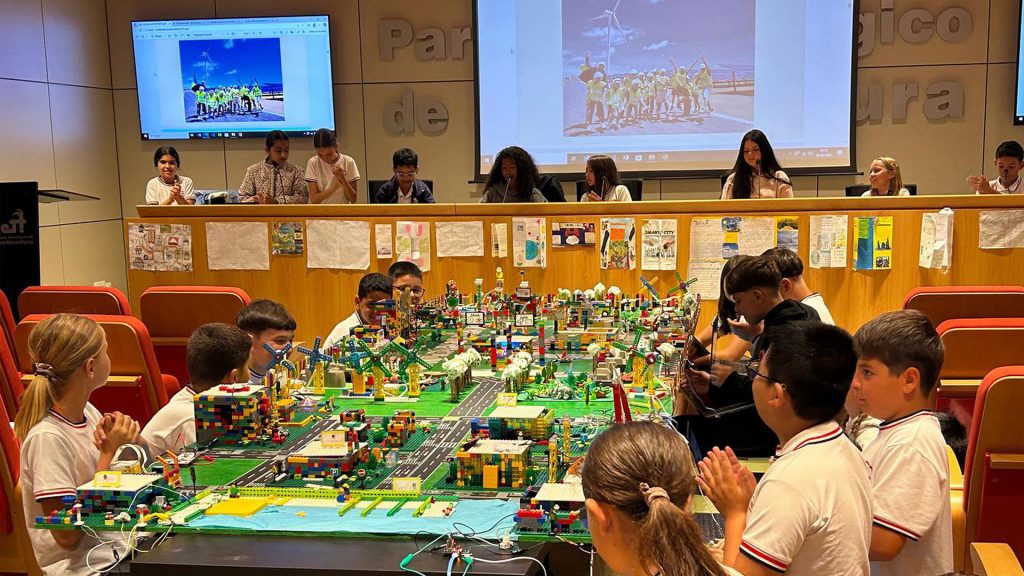
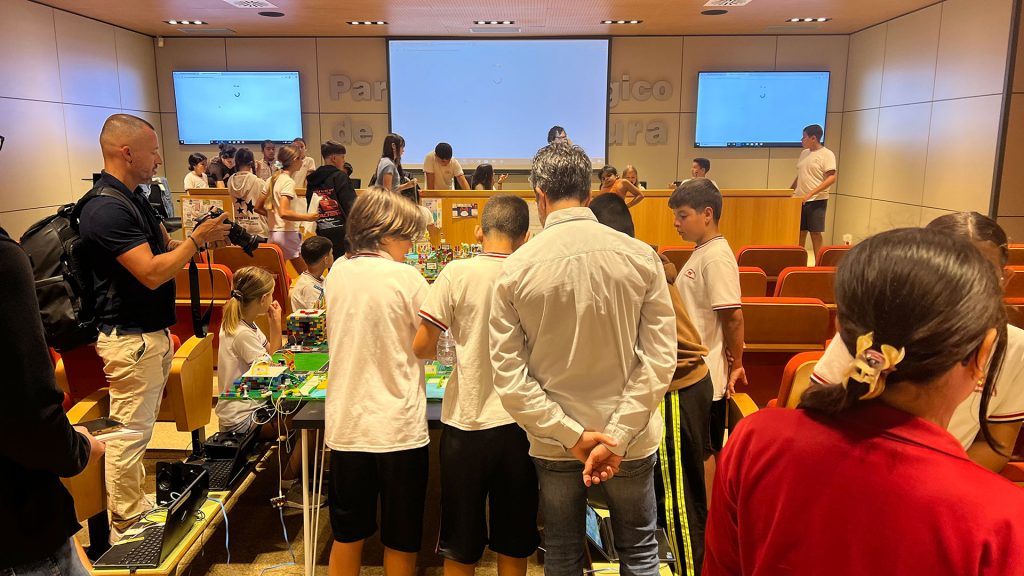
Yesterday, 18 June, we had the chance to meet them again—this time together with 6th-grade students—at the Fuerteventura Technology Park. There, they presented the final outcome of the project: “Smart City – A Sustainable City”. They also showcased a second, equally impressive proposal: an amusement park model designed and built by 5th- and 6th-grade students and their teachers over several months.
Both projects showed what happens when children are given context and tools: they naturally combine creativity, critical thinking, teamwork, and technology—while staying connected to local needs and the real challenges of their municipality.
The event brought together technical staff from the Park and institutional representatives, highlighting the value created when education and innovation meet at an early age. From MNX Online and TOURiLab, we didn’t want to miss it: part of our team attended to support their presentation and continue accompanying a group that, in some way, is already part of our innovation ecosystem.

The 15-minute city explained from Puerto del Rosario
The 15-minute city concept is simple (and powerful): essential services and everyday spaces should be reachable within 15 minutes on foot or by bike. It’s an approach that encourages cities to rethink mobility, accessibility, quality of life, and sustainability at a human scale.
What’s inspiring about seeing this work in primary school is that it doesn’t stay abstract—it turns into concrete questions. What’s missing nearby? What’s duplicated? Which routes do we take every day? What barriers exist? How could the city be more friendly for older people, families, or those who don’t rely on a car?
Technology, recycling, and the 2030 Agenda as learning tools
One of the most valuable parts of the project was how students brought it to life. Using tools such as LEGO Spike Essential, WeDo, and Makey Makey, along with recycled materials, they designed a city model inspired by Puerto del Rosario, incorporating sustainability criteria and linking it to the 2030 Agenda.
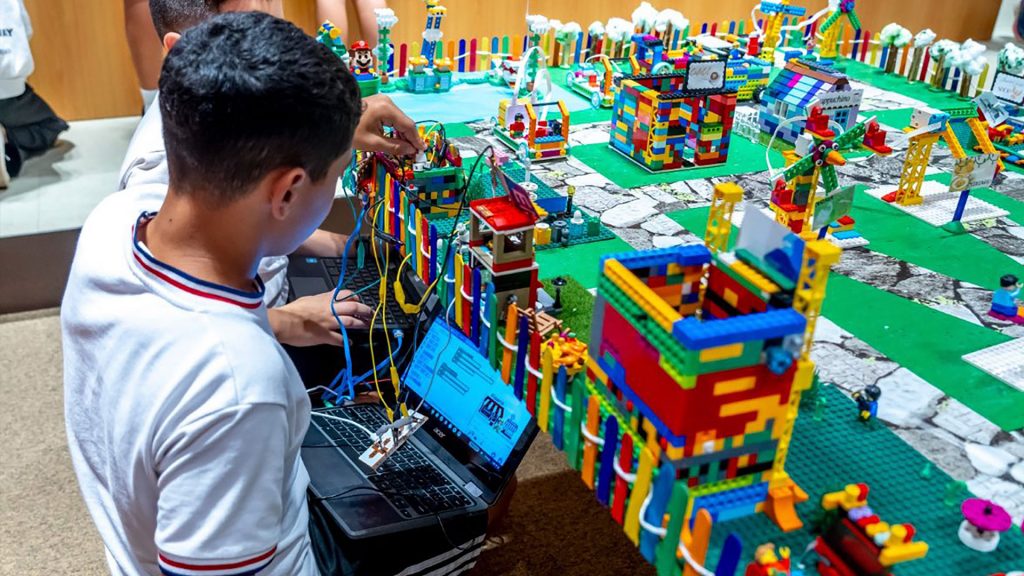
This wasn’t just about building “a nice model”. It was about learning to:
- observe their environment,
- identify problems,
- propose solutions,
- test, make mistakes, and improve,
- and explain ideas in public with clear arguments.
That blend of technical and human skills is exactly what makes experiences like this so impactful.
A project born from the Children and Adolescents Council
This initiative is part of the Children and Adolescents Council (CAI) of Puerto del Rosario, within the Child Friendly City programme. After seeing their work, it’s clear that children’s participation doesn’t have to be symbolic—it can become real, well-developed proposals shared with the community.
Over several months, students and teachers combined research and design, explored educational technology resources, and developed ideas aimed at improving their municipality. What stood out most was something you can’t fake: pride in work well done and the confidence that comes from presenting something meaningful.
Projects like this also plant early vocational seeds that may become key profiles for driving Fuerteventura’s digital transformation in the years ahead.
Thank you for letting us be part of the journey
We’d like to thank CEIP Poeta Domingo Velázquez and their teaching team for the dedication and approach behind this initiative. And congratulations to the students for the effort and the quality of their presentations. Seeing them speak so naturally about renewable energy, mobility, digitalisation, and sustainability is a clear sign that the future is already being built.
The future is designed locally… and it doesn’t care about age.
Are you a school and would you like to organise a visit or a session tailored to your students? Get in touch and we’ll explore the best fit—connecting education with useful technology is an investment that leaves a mark.